Critical Threshold in Istanbul Northern Railway Crossing Project: 25 Bids and $6.75 Billion Financing
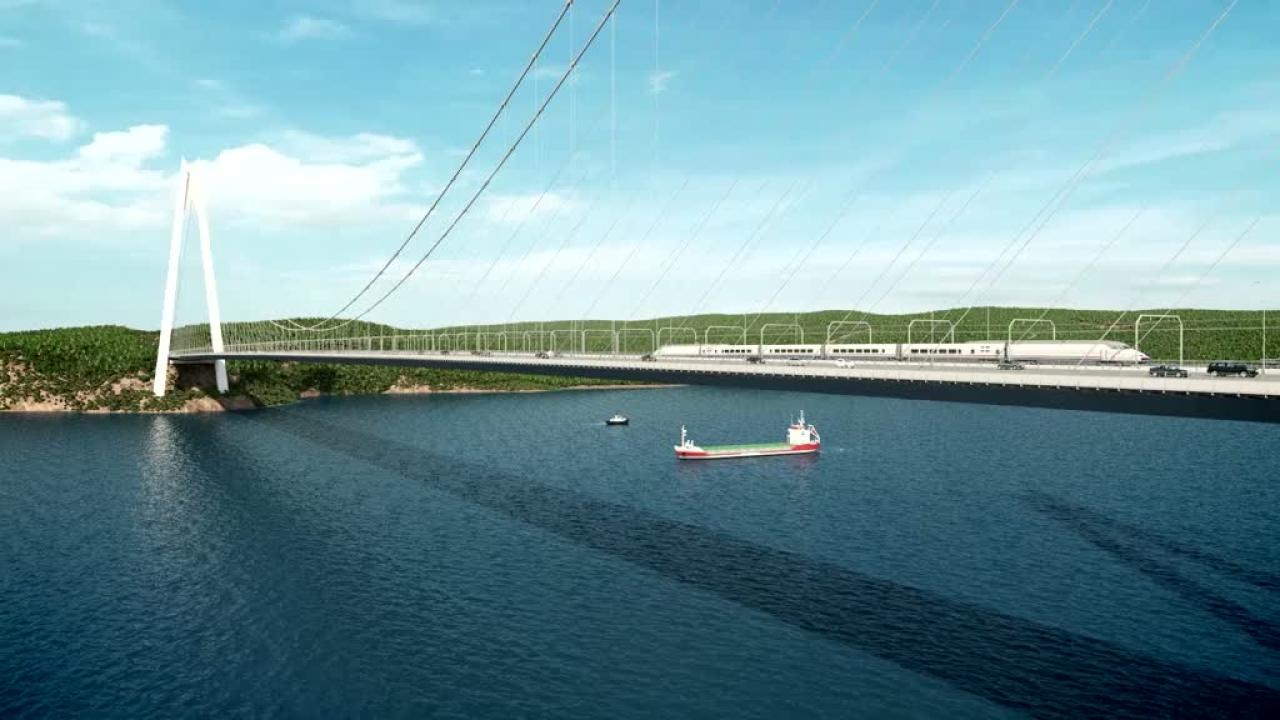
Minister of Transport and Infrastructure Abdulkadir Uraloğlu has announced a critical milestone in the Istanbul Northern Railway Crossing Project, a venture poised to revolutionize Turkey's transportation vision. The tender process for the project, which covers the route of Gebze-Sabiha Gökçen Airport-Yavuz Sultan Selim Bridge-Istanbul Airport-Çatalca, has attracted significant interest from both domestic and international firms. Minister Uraloğlu stated that a total of 25 bids were submitted, including participation from companies in China and Italy alongside Turkish firms, emphasizing that this will be Turkey's largest railway project backed by external financing.
The financial infrastructure of the project is also largely finalized. Uraloğlu announced that a consensus has been reached with six international financial institutions for a financing package totaling $6.75 billion. This development reaffirms global market confidence in Turkey's infrastructure projects and provides a critical guarantee for the project's sustainability. The massive undertaking, which includes the construction of 125 kilometers of double-track railway, is set to radically transform Istanbul's transportation landscape.
Background of the Development
The Istanbul Northern Railway Crossing Project is not merely a transportation line but the backbone of Turkey's logistics strategy. Activating the railway crossing capacity of the Yavuz Sultan Selim Bridge has been a long-standing goal, with technical and financial preparations conducted meticulously over many years. This line will form a corridor stretching from Gebze, across the northern axis of Istanbul, all the way to Çatalca.
Historically, Istanbul has struggled under the burden of transit between the two continents, relying heavily on Marmaray and existing bridges. This project aims to shift freight transport away from the pressure on Marmaray and onto the northern corridor. The technical specifications highlight the engineering challenges to be overcome, with the construction of 42 bridges and viaducts totaling 22.4 kilometers in length, and 44 tunnels spanning 59.1 kilometers, demonstrating the project's immense scale.
Designed to integrate with the ongoing Halkalı-Çerkezköy High-Speed Train Line, the project is being positioned as a seamless segment of the Europe-Asia railway network. This integration is viewed as a strategic move that will directly impact not only urban transit but also international transit logistics.
Expert and Industry Insights
Transportation experts note that beyond connecting the two sides of Istanbul, the project will serve as a 'keystone' for global logistics networks. Industry representatives state that connecting the two airports via rail will solidify Istanbul's status as a global 'hub'.
- The project's capacity for 33 million passengers will alleviate transportation issues in Istanbul's northern settlements.
- The target of transporting 30 million tons of freight annually is one of the strongest logistics moves supporting Turkey's 'Middle Corridor' strategy.
- Bids from China and Italy demonstrate the project's appeal to international investors.
- Reducing freight traffic on Marmaray will increase the efficiency of urban commuter lines.
- The $6.75 billion external financing model is a clear indicator of long-term economic confidence in the country.
Experts agree that the high ratio of domestic technology and materials to be used during the construction phase will enhance the capacity of the Turkish engineering sector. The use of high technology in tunnel and viaduct construction will particularly boost Turkey's global competitiveness in this field.
Economic and Social Implications
Economically, this project will act as a catalyst, triggering real estate and commercial activity along Istanbul's northern axis. Lowering logistics costs will boost Turkey's export capacity while accelerating the access of industrial zones to ports and airports. This translates into a brake on logistics-driven cost increases for the end consumer.
In terms of social impact, reducing traffic congestion in Istanbul and diversifying public transport alternatives will directly improve the quality of life for citizens. A rapid connection between the two airports will provide significant time savings for the business world and the tourism sector. Furthermore, the project's capacity for 24/7 uninterrupted freight transport will position Turkey as the region's most reliable logistics base in terms of supply chain management.
Future Projections and Outlook
In the coming period, the tender commission is expected to conduct a detailed technical and financial evaluation of the bids. Once the tender process is finalized, the timeline for site delivery and the commencement of construction is expected to be accelerated. The completion of the project will go down in history as the most concrete success of Turkey's 'Middle Corridor' vision in the international logistics network.
Regarding risk management, the project's geographical challenges and environmental impacts are expected to be monitored meticulously. However, the $6.75 billion financing agreement indicates that the project's financial risks have been minimized. With this massive investment, Turkey is building not just a railway line, but the logistics infrastructure for the next century.
In conclusion, the Istanbul Northern Railway Crossing is poised to create a multiplier effect for both economic growth and social integration, standing as one of the most vital links in Turkey's global logistics vision.
💬 Yorumlar 0
Henüz yorum yapılmamış. İlk yorumu siz yazın!