Minister Şimşek's Call at COP31: Development Banks Must Be Catalysts for Green Transition
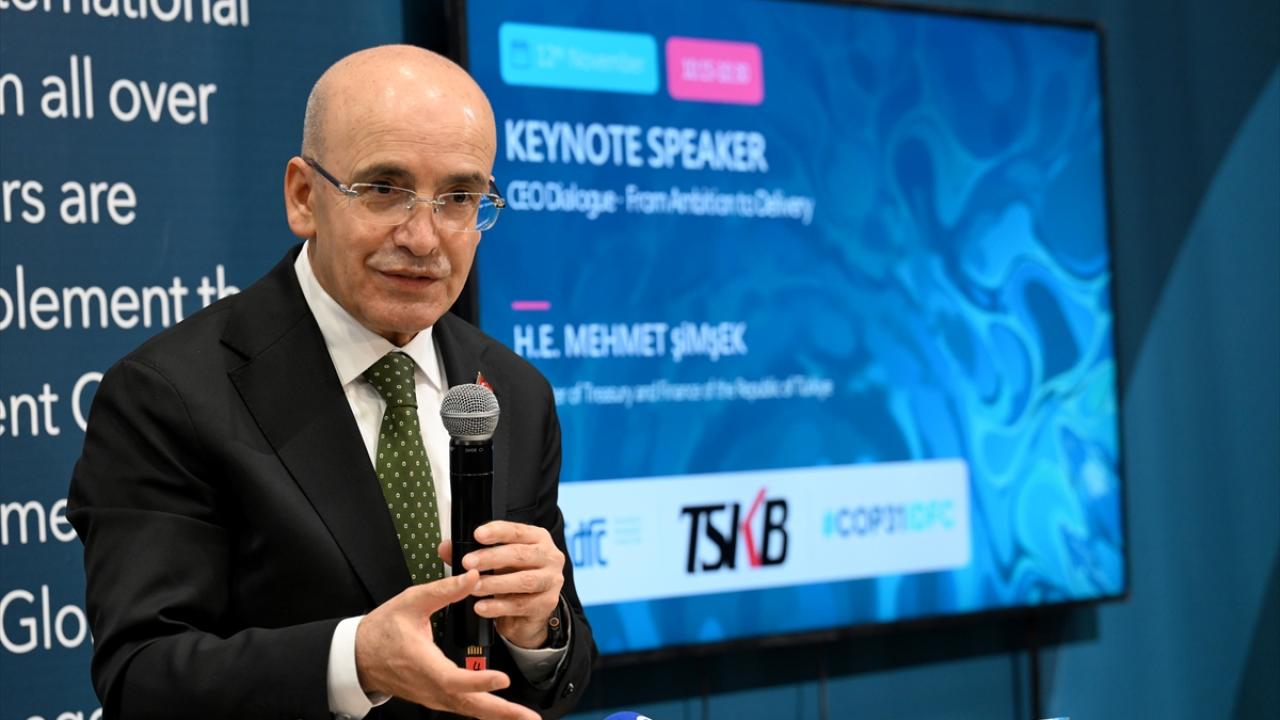
Treasury and Finance Minister Mehmet Şimşek delivered critical remarks on the future of the global financial architecture during a panel titled “From Ambition to Action: Strategic Partnerships to Mobilize Climate Finance,” held as part of the UN Climate Change Conference (COP31) in Antalya. Minister Şimşek highlighted that developing nations require approximately $4 trillion annually to meet their sustainable development goals, with $1.8 trillion specifically earmarked for climate finance needs. Pointing out that despite the efforts of multilateral development banks, the financing gap continues to widen, Şimşek argued that national development banks must play a greater role as 'catalysts' in bridging this deficit.
Background of the Development
Climate finance has emerged as one of the most fundamental topics of debate in the global economy in recent years. In line with the goals of the Paris Agreement, massive capital flows are required for developing countries to transition to green energy and enhance climate resilience. However, traditional financial systems are proving insufficient to meet this demand. Institutions like the Industrial Development Bank of Turkey (TSKB) and the International Development Finance Club (IDFC) are attempting to fill this gap by combining local expertise with global standards.
Historically, development banks have stood out as institutions providing long-term credit during industrialization processes. Today, the mission of these institutions is being redefined around 'green finance.' As Minister Şimşek emphasized, when the global expertise provided by multilateral banks is combined with the local market dominance of national banks, the 'bankability' of projects increases. This represents not just a financing issue but a structural transformation opportunity for emerging economies, including Turkey.
The COP31 process is viewed as a critical turning point for moving this transformation into the 'implementation' phase. While emphasizing Turkey's determination in this process, Minister Şimşek stated that financial flows are not just about numbers but also about raising corporate governance standards. This approach is fully aligned with Turkey's green and digital transformation goals.
Expert and Industry Insights
Economists and financial sector representatives find Minister Şimşek's emphasis on 'catalysts' to be highly pertinent. According to experts, the fact that development banks act not only as lenders but also as advisors enhancing technical capacity increases market depth. Key points emerging from sectoral assessments include:
- Adopting high environmental and social safeguard standards in project preparation processes boosts investor confidence.
- National development banks manage local risks more effectively, allowing multilateral banks to utilize their capital more efficiently.
- The proliferation of green bonds and sustainable finance instruments contributes to the deepening of capital markets.
- The integration of digital transformation with green finance maximizes operational efficiency.
- Long-term predictability directly influences the private sector's appetite for green investments.
Experts note that the 'know-how' national banks acquire from multilateral banks, particularly regarding risk management, spreads throughout the local economy. This ensures not only the financing of a single project but the elevation of standards across an entire sector.
Economic and Social Implications
Closing the financing gap is not just an environmental necessity but an economic one. As Şimşek noted, efficiency and competitiveness are essential for strong and sustainable growth. Green transformation is the key to remaining permanent in global value chains for production-oriented economies like Turkey. In this process, the role of the private sector is supported by affordable and long-term financing provided by development banks.
From a social perspective, the fight against climate change brings about a shift in employment toward green sectors and the construction of more resilient cities. The financing of this process by development banks means protecting social welfare and reducing vulnerability to climate risks. In terms of market equilibrium, these partnerships are expected to lower capital costs and encourage investors to focus on long-term goals.
Future Projections and Outlook
In the coming period, Turkey's roadmap for green and digital transformation is expected to become clearer. As Minister Şimşek stated, investors want to see 10 years ahead. Therefore, the clarity of goals and rules is vital for accelerating financial flows. The more active role of development banks in this process will also enhance Turkey's credibility in international financial markets.
Official processes require the integration of stricter environmental and social standards into local legislation. While this may create compliance costs in the short term, it could position Turkey at the center of the global green finance ecosystem in the medium to long term. Risks include global geopolitical uncertainties and volatility in financial markets. However, the goal is to minimize these risks through a strong network of strategic partnerships.
In conclusion, Minister Şimşek's message at COP31 offers a powerful vision that the financial system should be used not just as a resource transfer mechanism, but as an agent of change. By placing development banks at the center of this transformation, Turkey aims to both achieve its climate goals and increase its economic resilience.
💬 Yorumlar 0
Henüz yorum yapılmamış. İlk yorumu siz yazın!